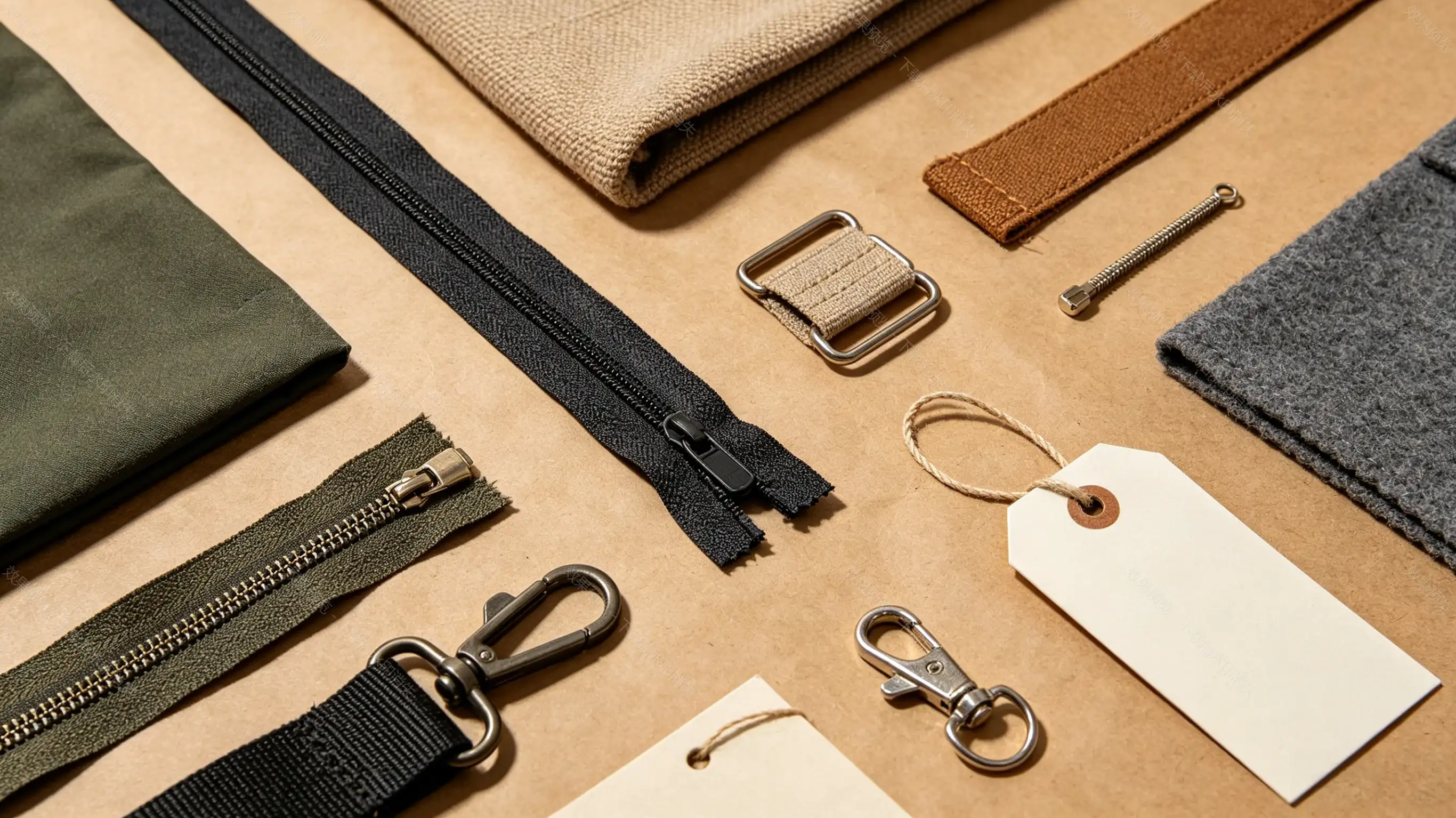
In 2026, the global garment and textile industry is undergoing profound structural changes. Driven by fluctuating international trade policies, updated environmental compliance standards, and evolving downstream apparel market demands, the entire industrial chain of fabrics, accessories, hardware fittings and packaging supplies has entered a new development cycle. Unlike the previous extensive scale competition, the current textile foreign trade market focuses more on product professionalism, quality stability, supply chain integration and one-stop service capability, which has become the core competitiveness of outstanding textile export enterprises.
As the core upstream raw material of apparel products, woven fabrics, knitted fabrics and functional sport fabrics maintain stable market demand throughout the year. Woven fabrics are widely applied in casual wear, outdoor coats, workwear and fashion garments due to their stable texture, good shape retention and diverse weaving processes. Knitted fabrics feature soft touch, strong elasticity and high comfort, occupying a dominant market share in loungewear, sweaters, sportswear and daily fashion apparel. With the rapid development of global outdoor sports and fitness trends, functional fabrics with waterproof, breathable, wear-resistant and stretch properties have become the fastest-growing segmented category in the textile industry. More overseas buyers tend to prioritize fabric functionality, color fastness, environmental protection performance and craft precision rather than simply pursuing low prices.

Supporting garment accessories have always been indispensable basic components of finished apparel, and their market demand grows synchronously with fabric trade. Rib knit for hems, as a professional matching material for garment necklines, cuffs and hems, effectively improves the fitting degree and structural stability of garments, and is a standard supporting material for high-quality knitted apparel and casual wear. Zippers and buttons, as the most commonly used hardware and decorative accessories, have upgraded from basic practical functions to diversified personalized styles, covering multiple types such as metal zippers, resin zippers, custom buttons and environmentally friendly buttons, meeting the customized design needs of different brands.
In addition, webbing cords, garment metal accessories, labels, hangtags and packaging products form a complete set of apparel supporting systems. In recent years, with the continuous improvement of global apparel export standards, overseas importers have put forward higher requirements for the overall matching degree, environmental protection compliance and production consistency of full-set accessories. Dispersed separate purchasing of fabrics, accessories and hardware is gradually eliminated by the market, and integrated one-stop sourcing has become the mainstream trend of global textile procurement.
Affected by the global supply chain restructuring, regional procurement characteristics are increasingly obvious. Southeast Asia, South America, Africa and the Middle East remain the core emerging markets for China’s textile and apparel exports. These regions have a large number of garment processing factories and brand trading companies, with long-term and stable demand for mid-to-high quality fabrics and supporting accessories. Meanwhile, European and American markets continue to raise environmental protection and quality inspection thresholds for imported textiles, forcing upstream suppliers to optimize production processes, strictly control material selection, production technology, color difference and product durability, and standardize the production and inspection standards of hardware accessories and packaging materials.
Shishi, Fujian, as a nationally renowned textile and apparel industrial cluster base, has complete upstream and downstream industrial supporting resources. The local textile industry has formed a mature industrial system integrating fabric weaving, accessory processing, hardware customization, label packaging and export trade. Relying on superior regional industrial resources, local foreign trade enterprises can efficiently integrate high-quality domestic supply channels, realize unified quality control of fabrics and full-set accessories, and effectively solve the problems of inconsistent product quality, scattered suppliers and long procurement cycles for overseas buyers.
In terms of market order characteristics, the global textile trade market presents a new trend of "small orders, multiple batches and fast delivery" in 2026. Traditional large-batch bulk orders are gradually reduced, while customized small-batch orders and trial orders are increasing year by year. This requires textile foreign trade enterprises to have flexible supply chain adjustment capabilities, rapid sample production capabilities and stable batch delivery capabilities. Enterprises that can provide integrated services including product selection, quality inspection, customized processing, unified packaging and one-stop export declaration are more popular with global buyers.
Industry analysts pointed out that the future competition of the textile and apparel foreign trade industry is no longer the competition of single product price, but the comprehensive competition of product quality, supporting capability, supply chain efficiency and service level. With the continuous upgrading of global consumer demand, functional, environmentally friendly, customized and high-cost-performance textile products will occupy the mainstream market. Fabric innovation, accessory refinement, hardware customization and standardized packaging services will become important breakthrough points for enterprises to expand overseas markets.
In the future, the global textile and garment supporting product market will maintain a steady growth trend. Overseas market demand will continue to be released with the arrival of the peak season for autumn and winter garment procurement and new product development. For textile foreign trade enterprises, adhering to quality-oriented operation, continuously optimizing product systems, improving supply chain integration capabilities, and providing professional one-stop import and export solutions will help stabilize long-term cooperative relationships with global customers and continuously expand international market share in the increasingly competitive global textile trade market.